Choosing the right pallet is critical for logistics efficiency, product safety and long term cost control. Businesses across India are increasingly comparing bamboo pallets and wooden pallets to determine which option delivers better value. This detailed comparison of bamboo pallet vs wooden pallet focuses on cost, strength and sustainability to help decision makers make an informed choice.
Overview of Bamboo Pallets and Wooden Pallets
Bamboo pallets are manufactured using engineered bamboo boards made from fast growing bamboo grass. They are designed for strength, uniformity and export compliance.
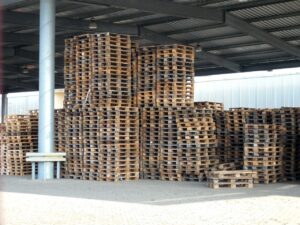
Wooden pallets are traditionally made from softwood or hardwood timber and are widely used due to availability and lower upfront cost, though quality varies significantly.
Cost Comparison: Bamboo Pallet vs Wooden Pallet
Initial Cost
Wooden pallets usually have a lower purchase price, especially low grade or recycled variants. Bamboo pallets may appear slightly more expensive at first due to engineered manufacturing processes.
Long Term Cost of Ownership
Bamboo pallets last longer and require fewer repairs. Wooden pallets often crack, warp or break, leading to frequent replacements. When maintenance, replacement and downtime are considered, bamboo pallets offer lower total cost of ownership.
Winner: Bamboo pallet for long term cost efficiency
Strength and Load Bearing Capacity
Bamboo Pallet Strength
Bamboo has a dense fiber structure that provides excellent load bearing strength. Bamboo pallets maintain structural integrity under repeated use and heavy loads, making them suitable for industrial and export applications.
Wooden Pallet Strength
Wooden pallet strength depends heavily on timber quality and construction. Inconsistent wood density can lead to weak points, especially under heavy or uneven loads.
Winner: Bamboo pallet for consistent and reliable strength
Durability and Lifespan
Bamboo pallets resist splitting, cracking and nail loosening better than wooden pallets. They perform well in rough handling and long distance transport. Wooden pallets are more prone to damage and often have shorter usable life cycles.
Winner: Bamboo pallet for durability
Sustainability and Environmental Impact
Bamboo Pallet Sustainability
Bamboo is one of the fastest growing renewable resources. It absorbs more carbon dioxide during growth and regenerates without replanting. Bamboo pallets support sustainable sourcing and lower environmental impact.
Wooden Pallet Sustainability
Wooden pallets rely on timber from trees that take decades to mature. Unsustainable logging contributes to deforestation and higher carbon footprint if not responsibly sourced.
Winner: Bamboo pallet for sustainability
Export and ISPM 15 Compliance
Wooden pallets used for export must comply with ISPM 15 standards through fumigation or heat treatment. This adds cost and documentation requirements.
Bamboo pallets are generally classified as processed materials and are often exempt from ISPM 15 treatment, making them more export friendly.
Winner: Bamboo pallet for export compliance
Performance in Indian Climate
India’s humid climate and monsoon conditions can affect wooden pallets by causing moisture absorption and pest infestation. Bamboo pallets, when properly treated, perform better in humid environments and offer improved resistance to termites and fungi.
Winner: Bamboo pallet for Indian weather conditions
Which Pallet Should You Choose
If your priority is low upfront cost and short term use, wooden pallets may seem suitable. However, for businesses focused on export readiness, durability, sustainability and long term savings, bamboo pallets offer clear advantages.
Conclusion
The comparison of bamboo pallet vs wooden pallet clearly shows that bamboo pallets outperform wooden pallets in strength, sustainability and long term cost efficiency. As supply chains in India evolve and environmental accountability becomes essential, bamboo pallets are emerging as the smarter and future ready choice for logistics and storage.